Because my father was in the U.S. Army, I did the first half of 6th grade in Marshall, Missouri and the remaining half in Neu Ulm, Germany. 1972-1973 was the only year that I had to change schools in mid-year. As any Army brat will tell you, that's pretty good and pretty lucky.
Although my father was already off in Germany, and we were living with my grandparents, my sole semester at Southeast Elementary School was great. My 6th grade teacher was a businesslike but friendly young woman of approximately 26-28 years of age, and her name was Mrs. Betty Lemmon.
Unlike other teachers I'd had, Mrs. Lemmon didn't seem to mind if students knew that she had a first name. She also had a 4-year-old son named Timmy. When the class was unruly or not working up to her standards, she announced that Timmy could do better than we were doing. We never met Timmy, so we all had to take her word for it. Soon Mrs. Lemmon would have an additional way to measure her students, for she was expecting another baby sometime in the winter of 1973.
I remember a couple of things about Mrs. Lemmon's classroom. One was that my desk was the old fashioned type that opened up at the top. I'd never had a desk like that before. It was cool at first, but to get into it, you had to take everything off the desk first. My previous desks had had storage on the bottom on the side.
The other thing, of course, involved books. To the left of Mrs. Lemmon's desk was a table with books. These were, Mrs. Lemmon informed us early on, the books she would like the class to read when we were finished with our other work. There was no reason to be talking when there were so many books to read. One couldn't possibly read them all in a year. (I was going to do my best to knock them all out in one semester!)
After students read a book, they could add a link to the construction paper "book chain" that Mrs. Lemmon hoped would wrap all the way around the room by the end of the year. She said that if it got all the way around before the end of year, the chain would continue its journey for a second triumphant wrap.
Before adding a link though, students had to fill out a mini book report form answering questions about the book. After Mrs. Lemmon was satisfied that the book had been properly read, then students could have their green construction paper link and write on it their name and the title of the book. I didn't give a damn about the book chain. I just wanted at those books!
Sometimes, in those few seconds between blissfully finishing a book and raising my hand for permission to get up and get another, I'd look up at the book chain on the wall and feel sorry that it was moving so slow. I though that maybe I should do a report and fill out a link. I'd soon have that sucker moving like greased lightning!
But you know what? During the 3 months I was in Mrs. Lemmon's room, I never added a single link to the chain. I still feel kind of bad, and still think to myself guiltily that if they didn't get all the way around the room by the end of the 1972-73 school year, I shared a large part of the blame.
So yes, things were going well, but here's what really made my time at Southeast Elementary sublime: Even though we were huge 6th graders, the biggest kids at the school, every afternoon we stopped work and Mrs. Lemmon read to us from a novel. How long did she read? I'm trying to remember. 30 minutes? 45? 1 hour? Whatever it was, it was a good chunk of time, because Mrs. Lemmon was able to breeze through 3 novels from September to December.
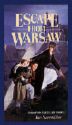
Our first novel was Escape From Warsaw. (This book is also known as The Silver Sword). 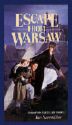 EFW tells the story of 3 children during WWII who are separated from their parents, and must stay together through all sorts of dangers. The son gets lost or captured for a while, and during that time, the older girl and her little sister meet and befriend a young orphan named Jan, who is helpful to them because he's street-savvy. He stays on as part of the family.
As Mrs. Lemmon read, I cast myself in the role of Ruth, the older girl, and was on the edge of my seat. I couldn't believe it when Denny Velasquez fell asleep one afternoon! After reading time, Mrs. Lemmon spoke to Denny in the hallway. I strained my ears to hear if she was, as my military father always put it, "chewing his ass."
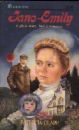
Our second novel was Jane-Emily, which was a bit of a ghost story. One summer, Louisa, age 18, takes her young niece, Jane, to visit her grandmother on the other side of the family. It's a lovely visit, but there's a malevolent feel to the surroundings. It's soon revealed that Emily,  (Jane's other aunt, the grandmother's daughter) had died of pneumonia 10 years before, right in that very house. Minus the Mrs. Danvers character (thank God!) it was somewhat like Rebecca for the candy-and-bubblegum set.
Mrs. Lemmon was able to get a very creepy tone going, and she scared the crap out of me. I hated to go to sleep at night because when I heard a branch scrape my window, I thought Emily was haunting me. For years after, when I saw a reflecting-ball on someone's lawn, I'd get shivers. I read in someone's blog (who?) that this book will be or has been re-issued. Great news!
Our third and final novel was The Shepherd Of The Hills. My mother, who usually had little, no, or a negative reaction to books, lit up when she heard that Mrs. Lemmon was reading this book to the class. "My teacher read it to my class in 6th grade," she told me. Thrilled to talk to my mother about a book, I continually tried to get her to tell me some of the good stuff that would be in the novel so I would know before Mrs. Lemmon read it. She just said that I'd "live every minute of it" and to go play because I was driving her crazy.
(At this time, my "play" consisted of trying to write my own novel. It was called Tilly Tillis: The Life Of A Woman Outlaw. I was writing it in my grandparents' basement on hot pink notebook paper that Mrs. Lemmon had deemed unfit for classroom assignments.
Despite the title, I had started the novel when Tilly was just born, and I was having trouble getting her out of childhood and into the life of a woman outlaw. She finally grew up on page 35, robbed some banks, got married, had a baby, robbed some more banks, got shot and died, also on page 35 which was also the last page of the novel.)
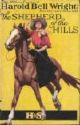
The Shepherd Of The Hills a 1907 novel by Harold Bell Wright, is the story of two families who live in the Ozarks: The Matthews family, headed by big, strong "Old Matt" and sweet "Aunt Mollie" and their son, "Young Matt", and the Lane family, which consists of widower Jim Lane, who is a good man at heart, but who has fallen in with bad company, and his daughter, Sammy, a beautiful tomboy who wants to become a "sure 'nough lady" so that her weakling fiance, Ollie, will be proud of her when they marry and move to the city.
Other characters include a young villain named Wash Gibbs, who is part of a gang in those parts  called the Baldknobbers. He and Young Matt are almost equally strong and engage in a contest for the title of "The Strongest Man In The Hills". There is also a teenaged boy called Pete who lives with the Matthews family. When asked about Pete's mother and father, Old Matt just scowls. Pete suffers some sort of congenital brain problem, and he rambles on about things that actually turn out to be clues about things finally revealed at the end of the novel. (I wonder if Faulkner read this novel. It was a bestseller.)
An older gentleman, exhausted from the pressures of the city wanders into these hills one day and decides to stay. He moves into a cabin and becomes, well, the title character. He is kind and wise, but he is searching for something and harboring a secret that Old Matt guesses during the course of the novel. He befriends Pete and gives Sammy and Young Matt each the benefit of his kindly wisdom.
Anyone with half an ear could tell that this was the book Mrs. Lemmon loved best, because she would stop reading at intervals and want to discuss it. Her gift for giving the characters distinctive voices was even more apparent and well-developed than in the other two novels. (Find this woman and give her an audiobook contract!)
I had always liked school pretty well, but of course I was never adverse to a sick day every once in a while, as needed. All of that changed during The Shepherd Of The Hills. My attendance was perfect. I could not miss one day of school for fear of missing a chapter.
Not long after its publication, The Shepherd Of The Hills was soon adapted into a play, which is still performed for tourists in Branson, Missouri. Branson is close to the location for the setting of the novel. The play is a perennial favorite.
[The book was also made into a lackluster movie sometime in the 1930s with John Wayne. Avoid! Avoid!]
Sadly, this was the last novel for the Fall, 1972 semester. December was half-over. I'd had my 11th birthday, and in a week or so, my mother, my younger brother and I would be leaving. Coincidentally, it was also Mrs. Lemmon's last novel for a while. After the Christmas break, she would start her maternity leave, and the class would have a substitute probably until early spring.
I was pretty happy about that. If I was off in Germany and couldn't hear Mrs. Lemmon read, there was absolutely no reason the rest of my former classmates shouldn't suffer as well.