Thursday, October 28, 2010

October 2010: Buying

Only three this month. I can restrain if I want to, but it's a hateful business. .

1. True Grit - Charles Portis. My copy -- the 1969 movie tie-in with the folk art painting of the girl and her horse on the front cover and Kim Darby and Little Blackie on the back cover (left) -- is back in Missouri. Impatient to re-read the book before the new movie comes out on Christmas Day in the US, I ordered a newer edition (right) from Amazon. Much to my relief, Mattie, Little Blackie, Rooster, LaBoeuf and the rest of the gang arrived safely on Thursday. I was worried that it would get stolen from my mailbox and flung about like my Flashman books did last summer. I prepared myself. Had it gone missing, I was planning to knock -- no, make that POUND -- on every damn door in this apartment complex. 2. Jazz English Book One Workbook - Gunther Breaux. Only $4.00 (USD) and a steal! Jazz English is my very favorite textbook for English conversation. People borrow it from me and forget to return it and I go out and get another copy. I got to meet Gunther Breaux at the recent (October 16-17) KOTESOL conference, and I hope I didn't totally gawp and burble. Professor Breaux gave such a great motivational talk about how to test speaking ability that I went all the way from wanting to puke if I had to teach another conversation class all the way to raring to get at them and wishing that my schedule could be nothing but conversation classes. 3. Jazz English Book Two Workbook - Gunther Breaux. Yes, I'm a fan! Go Professor Breaux! Yes, I want to apply for a job at Hankuk University of Foreign Studies so I can breathe the same air....okay, gotta stop. I'm starting to remind myself of Annie Wilkes. Not. Good. Atall. . It's a little early to report/confess my buying, but I'm done for October. I'm not going anywhere near a bookstore until early November.

Monday, October 25, 2010

Halloween: Taking Suggestions

I've thought of the perfect costume: I'd like to be a bookshelf this year, but since I'm nearly hopeless at crafts, I don't quite know how to execute my vision. Calling all inspired bookworms.

(Now that I've got the idea and help is hopefully on the way, I suppose the next step would be to get myself invited to someone's Halloween party.)

Saturday, October 23, 2010

Library Loot: Not Quite Scott-Free


I dropped in to my library for just a moment to return The Red Badge of Courage, but of course I couldn't leave empty-handed. Cruising the shelves, I found The Real F. Scott Fitzgerald: Thirty-Five Years Later by Sheilah Graham. Graham was an English-born Hollywood gossip columnist who is also extremely well-known for being F. Scott Fitzgerald's girlfriend.

Although they were only together for three years, until Fitzgerald's death in 1940, it seems as if Graham never got over him. In the 1950s, she co-authored a book with Gerold Frank called Beloved Infidel about her years with Fitzgerald. A few years later in College of One, she wrote about how Fitzgerald tried to help her plug the gaps in her limited education (which she was sensitive about) by fashioning a two-year curriculum for her.

In the early 1970s Nancy Milford's landmark biography of Zelda Fitzgerald was published as well as a book by journalist Aaron Latham called Crazy Sundays, which was about Fitzgerald's final years in Hollywood. Graham perceived enough inaccuracies about Scott and herself to be galvanized into writing another memoir in 1976.

.

Apparently, during the writing of Beloved Infidel, Graham had to hold back some of the juicier tidbits because of the morals and mores of the times. She also felt as if she still had a hazy romantic vision of Fitzgerald then, and that while writing The Real F. Scott Fitzgerald: Thirty-Five Years Later (Isn't that title a clunker? Beloved Infidel is miles better!), she could see him much more clearly from the vantage point of an older woman.

Graham never wrote any more books about her relationship with Fitzgerald. She died sometime in the late 1980s. A few years later, her son, novelist Robert Westbrook, who was born several years after Fitzgerald died, wrote an even juicer tell-all biography about Fitzgerald and Graham called Intimate Lies: F. Scott Fitzgerald and Sheilah Graham Her Son's Story. Sounds kind of icky, and apparently he inherited the clunky title gene from Mum.


I feel like reading gossip, but not just any gossip. Literary gossip is what I want. I hope it's not *too* juicy. I'm still getting over that one part in A Moveable Feast where Hemingway and Fitzgerald are discussing the latter's uh, dimensions.

Thursday, October 21, 2010

Reading and Watching: The Red Badge of Courage


Work is not only the toad that squats on my life, it's also the professional wrestler who's got me in a headlock and is making me smell his rancid pits day in and day out. Still, it's hard to keep a good bookworm down. I managed to pop my head out for a few hours and teamed up the book and movie versions of The Red Badge of Courage.
.

Red Badge the book manages to be both brilliant and annoying. I'll do annoying first: Why bother to give the characters names then not use them? Why refer to them as the Youth, the Loud Soldier, the Tattered Man and the Tall Soldier after we've already been introduced to most of them by name? Also confusing is that Wilson, the Loud Soldier becomes the Quiet Soldier after their first battle then finally, the youth's friend.
.
The griping about names is akin to nitpicking. I'm ready to do brilliant now: I'm truly stunned that Stephen Crane never saw a day of battle and yet so perfectly rendered it onto the page. According to various sources I've seen, he interviewed countless Civil War veterans thirty years after the fact, so he must have either had a rare gift as a journalist or had some outstanding interviews. Perhaps both.
.

Equally stunning is that he was only 22 when he wrote the book. I don't know whether to be more impressed with his amazing psychological insights or his incredible gift for imagery. Crane, who was also a poet, lays on the imagery pretty thick and sometimes it seems as if he's flinging it against the wall to see what will stick, but this technique often produced some starkly wonderful results:
.

The battle was like the grinding of an immense and terrible machine to him. Its complexities and powers, its grim processes, fascinated him. He must go close and see it produce corpses.
.

Here's the one that has launched a million term papers:
.

The red sun was pasted in the sky like a fierce wafer.
.

For the seriousness of its subject, The Red Badge of Courage has some flashes of humor as well. Here's the young lieutenant, rebuking his men for too much gabbing and not enough marching:
.

"There's too much chin music and too little fightin' in this war anyhow."
.

Once in the heat of attack, the lieutenant has to urge his unseasoned regiment on:
.

The men stared with blank and yokel-like eyes at him. He was obliged to halt and retrace his steps. He stood then with his back to the enemy and delivered gigantic curses into the faces of the men. His body vibrated from the weight and force of his imprecations. And he could string oaths with the facility of a maiden who strings beads.
.

As the novel draws to a close, Crane lapses into Biblical cadence to describe Henry's/the youth's coming-of-age, his transformation from coward to heroic flag-bearer:
.

So it came to pass that as he trudged from the place of blood and wrath his soul changed. He came from hot plowshares to prospects of clover tranquility, and it was as if hot plowshares were not. Scars faded as flowers.
.

Then it was time for the 1951 John Huston movie, starring Audie Murphy. It's also annoying and brilliant. Apparently, the film was chopped down from a conventional length to a measly 69 minutes. Then, this horribly obnoxious and intrusive narration by James Whitmore was added. Every time the youth (played by WWII war hero Audie Murphy) goes off alone with what's meant to be a thoughtful look, the narration blares in again as if the audience can't be trusted to figure things out.
.
Even worse, when Whitmore begins narrating at the beginning of the film, he delivers some cornball lines (over the image of a picture of a clean-shaven Crane) about how Crane was a boy when he wrote The Red Badge of Courage and how its publication made him a man. Then he starchily announces (warns?) that there will be more narration throughout the movie. Awkward, cringeworthy stuff.
.
One last picky bit: the characters serve up Crane's dialogue faithfully, but the lines are set off by little pauses, and don't touch other lines of dialogue -- kind of like those really fancy restaurants where the food is all tidily arranged upon presentation.


There were things about the movie I appreciated. Huston's direction and the great camera work by Harold Rosson keep the film moving along nicely. Murphy is supported by some terrific character actors like Royal Dano, Robert Easton Burke, John Dierkes and Arthur Hunnicutt -- their faces are recognizable from countless Westerns. Rosson comes in for repeated close-ups of the men's weary and weathered faces, but it always feels respectful and genuine. Furthermore, it adds back in a rich layer that the narration stripped away. Bill Mauldin, a WWII cartoonist (who has a face that begs to be caricatured as well) performs admirably in an inspired piece of casting as the Loud/Quiet/Friend Soldier.
.

I'm curious to see how the 1970's TV movie starring Richard Thomas as the youth compares with this version. I can totally see John-Boy as Henry Fleming.
.

As for more books by Stephen Crane, I'm hoping to find a copy of Maggie: A Girl of the Streets, his first novel.

Monday, October 11, 2010

Sunday, October 10, 2010

Life During Wartime


Set during World War II, The Naked and the Dead is about a platoon of soldiers whose commander, General Cummings, is trying to take an island in the South Pacific from the Japanese. The 700+ page novel shifts back and forth between the action with the platoon (led by the monstrous Sgt. Croft) as well as examinations of their respective psyches, the machinations of the odious Cummings and a detailed look at each character's life before the war. Gritty, raw, unrelenting, unsparing -- this is Naturalism at its best -- or worst, depending on your feelings about the genre.
.
The Naked and the Dead is a staggering novel. Influenced heavily by Tolstoy (according to the author's introduction to the 50th-anniversary edition) Mailer wrote it when he was only 23. Unbelievable. As some of the enlisted men in the novel might say, it's fugging brilliant. I was shattered when I finally finished it. I don't even want to talk about it too much; I just want people to go read it.
.
A movie version of the book was released in 1958. Although it couldn't possibly have the depth that the novel does, I'd like to see it because it has a strong cast. Supposedly a remake is in the works as well.

Monday, October 04, 2010

Guest Post: Sh*t My Mom Reads

She's Bybee to you, sometimes Susan. She's Mom to me. Sometimes Susan. She's like, "You know, I was reading decades before you were born!' I'm like, "Whatever." She's still reading. This is what she read this month. No Flashmans, though. She needs to get back to that.


1. Shortcomings - Adrian Tomine. This is a graphic novel, so points for that. Actually, she bought it for me in the Dallas airport. When she gave it to me, I told her that I'd already read it and that I've read just about everything by Tomine. You should've seen her face. And she apologized. And I was like, "Come on, we're not Canadian." She got to enjoy it though, so it worked out OK.


2. Hank Williams - Colin Escott. I don't think I'd read this. Not because it's Hank Williams or because I'm not a big fan of country music. I just don't care for really long biographies.


3. Noah's Compass- Anne Tyler. I think she's been on an Anne Tyler kick for a long time. She gets all "Oooooh Anne Tyler!" and "Get me to a bookstore now!" when Tyler comes out with a new one.


4. The Twits - Roald Dahl. Is she just now getting around to this? My favorite part was when Mr. Twit sent Mrs. Twit up with those balloons and she comes back down and lands on him and says she'll nash him to a nozzle, then reverses the sounds. Mom read this because she said that Faulkner Guy assigned it to his class. Last year, he made them read Fantastic Mr. Fox.


5. Red Harvest - Dashiell Hammett. I don't know anything about this book, except Mom said that the body count was absurdly high.


6. A Death in Belmont- Sebastian Junger. I like true crime. The best one is Bully. The one about the Texas cheerleader's mom is good, too.


7. After Dark, My Sweet - Jim Thompson. She's still on her Jim Thompson kick. I want to check out his work. Stephen King said he was great. Her book club is reading The Killer Inside Me. She left a copy in her mailbox for some woman who wants to join the group to pick up. It was there all weekend. I found it and took it out and asked Mom if I could take it home. She said OK.


8. The Giver - Lois Lowry. I told her to read this years ago! It's about time! Great book, one of my favorites. I like how Jonas' world becomes more and more dystopian.


Glad she only read 8. I want to stop writing now.

Friday, October 01, 2010

Library Loot: That Nonfiction-y Feeling Again

When I was in my library the other day looking for a copy of the Koran, I noticed that the 200s section (AKA the religion section) is actually pretty good. The Christian part of this section is solid with many scholarly-looking books about various aspects of different churches and sects. The Judaism section is a little skimpy and Hinduism and Islam barely get a nod. There's a brief wave to mythology and Native American religious practices. I can't remember seeing anything about Mormonism.
.
Buddhism is, of course, the clear winner with rows and rows and rows of texts -- most of them in Hangul. The 200s is a part of the library I've neglected since I came here, so when I saw all the glittering possibilities, my interest was piqued. I made notes for future library lootings. Here's what I picked up today:


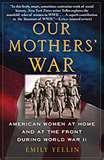
1. Our Mothers' War: American Women at Home and at the Front During World War II - Emily Yellin. I saw this one at the edge of the 900s while making my way to the 200s. In a sea of Hangul, I love the way titles in English shimmer and beckon and tickle my peripheral vision. I dipped into this book here and there and everything was so intensely readable. Did I mention the pages and pages of outstanding, iconic pictures? This looks like a winner.


2. Menopause: The Inner Journey - Susanne F. Fincher. I found this one in the mythology part. Judging from a quick peek inside, it's probably a little too New Age-y for my tastes. Also, my hackles rose at the first sentence: The passage from middle-aged to elder, marked for women by the menopause, happens around the fiftieth year. There's also something about passing from being a middle-aged woman to a "young crone". Elder. Crone. Damn, that feels pretty harsh. I don't know why I didn't hurl the book as well as my breakfast and run screaming from the library. We'll see how it goes.


3. I Give You My Life: The Autobiography of a Western Buddhist Nun (originally published in German as Ich Schenke Euch Mein Leben) - Ayya Khema. This was one of a handful of English-language books in the Buddhist section. The author was born in Berlin, Germany in 1923 into a Jewish family and, at the time the book was published in 1997, was living as a nun in Allgau, the site of the first Buddhist monastery in Germany. Along the way, she seems to have experienced marriage and motherhood (there are pictures of her with her children and grandchildren) and traveled to many different countries. Illustrated with photos of friends and family, this seems like a portrait of a fascinating life.
.
Today was another 3-book haul. That's how it is when your main transportation is walking. Call me wimp, say that I'm merely a pretender to the shelves, but it's downright painful to lug 6-10 books uphill and downhill. UpHELL and downHELL, I should say. That trek informs quite a few of my reading/looting decisions. For example, I want to read The Forsyte Saga, but to do so, I must check out a bulging doorstop of a volume that is the collected works of John Galsworthy. There's novels in that overstuffed tome that not even Galsworthy gave a damn about.
.
I've determined that having a student who is a muscular Physical Education major and an inveterate brown-noser who obsesses about his (or her) English grade would be just the ticket for my library loot angst, but that particular combination of student is more difficult to find than you'd think. I'll have to struggle along with my paltry harvest for now.